MakeUGC Review 2026: AI UGC Video Ads Worth $10 Per Clip?
- MakeUGC is built for DTC ecommerce brands — the entire platform, from its content library to its avatar selection, is optimized for product-focused UGC ads.
- Seedance 2.0 and Veo3 on every plan — unlike many competitors that gate newer models behind expensive tiers, MakeUGC includes both from the $49/month Startup plan.
- The math is steep at ~$10 per video — 5 credits for $49/month means you're paying a premium for the convenience of a managed platform over raw API access.
- Templates are great, blank canvas is daunting — beginners will love the guided workflows, but creating something truly custom from scratch requires a learning curve.
What Is MakeUGC?
I've been deep in the AI video space lately — testing platforms, comparing models, trying to figure out what actually works and what's just hype. The ecosystem is genuinely confusing right now: you've got diffusion models, Chinese models, self-hosted options, API brokers popping up weekly, and very little quality written content to help people navigate any of it. So I'm doing it myself. Testing these tools, documenting the experience, and publishing honest reviews.
MakeUGC is one of the first platforms I put through the gauntlet. It's an AI video platform that generates UGC-style ad content using realistic AI avatars — think of it as a production studio replacement for DTC brands that need talking-head product ads but don't want to hire creators, coordinate shoots, or deal with the unpredictability of real humans.
The platform gives you access to over 300 AI avatars, 35+ languages, and — as of early 2026 — integrations with some of the most capable video generation models available: Seedance 2.0 and Google's Veo3. It also includes tools for B-roll generation, image creation, batch processing, and a curated content library of templates organized by industry.
The pitch is simple: type a script, pick an avatar, generate a professional-looking UGC ad in minutes. The reality, as I found out, is a bit more nuanced.
Getting Started
MakeUGC offers a $1 trial for 3 days, which immediately sets it apart from platforms that want $50+ upfront before you can touch anything. In the current AI landscape — where new tools appear weekly and half of them feel like thin wrappers around the same APIs — a low-risk trial is genuinely appreciated. You get full platform access, but only 1 video credit to actually generate content.
That single credit created an interesting dynamic: I found myself nervous to actually use it. You want to explore the platform, understand how everything works, pick the right model, write a good prompt — but you know you only get one shot. It's like being handed a single bullet and told to hit a bullseye you've never aimed at before. I ended up spending way more time in the tutorials and content library than I probably would have if I had 3-5 credits to experiment with.
Sign-up itself is straightforward. You land in a workspace with folders, a sidebar for navigation, and the ability to start a new project right away. The dashboard is clean and modern, but there's a lot going on: Tutorials, Content Library, Video Agent, AI Ads editor, Settings — it feels like a tool built by a team that's been shipping features fast, and the sheer volume of options can be overwhelming on first visit.
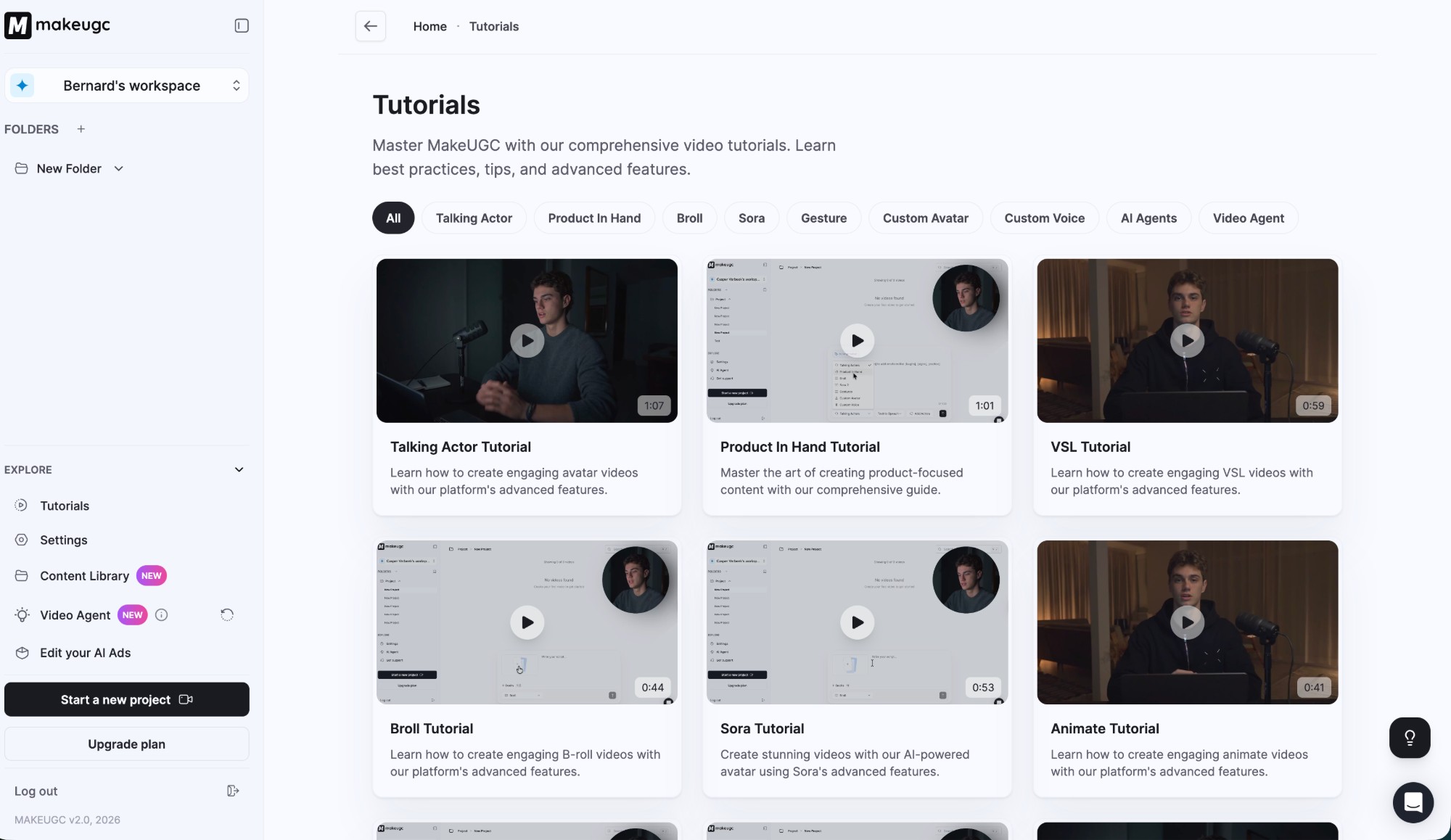
The good news is that MakeUGC ships a solid set of video tutorials covering every major feature: Talking Actor, Product In Hand, B-roll, Sora integration, Gestures, Custom Avatars, and their new Video Agent. For a platform with this many moving parts, having guided walkthroughs isn't a luxury — it's a necessity. And they deliver here.
Pricing Breakdown
Here's where things get interesting — or painful, depending on your perspective.
| Plan | Price | Videos | Cost/Video | Key Extras |
|---|---|---|---|---|
| Startup | $49/mo | 5 | ~$9.80 | Seedance 2.0, Veo3, B-roll, Batch Mode |
| Growth | $69/mo | 10 | ~$6.90 | Same as Startup |
| Pro | $119/mo | 20 | ~$5.95 | Product In Hand, Custom Avatar, Video Agent, PDF to Video |
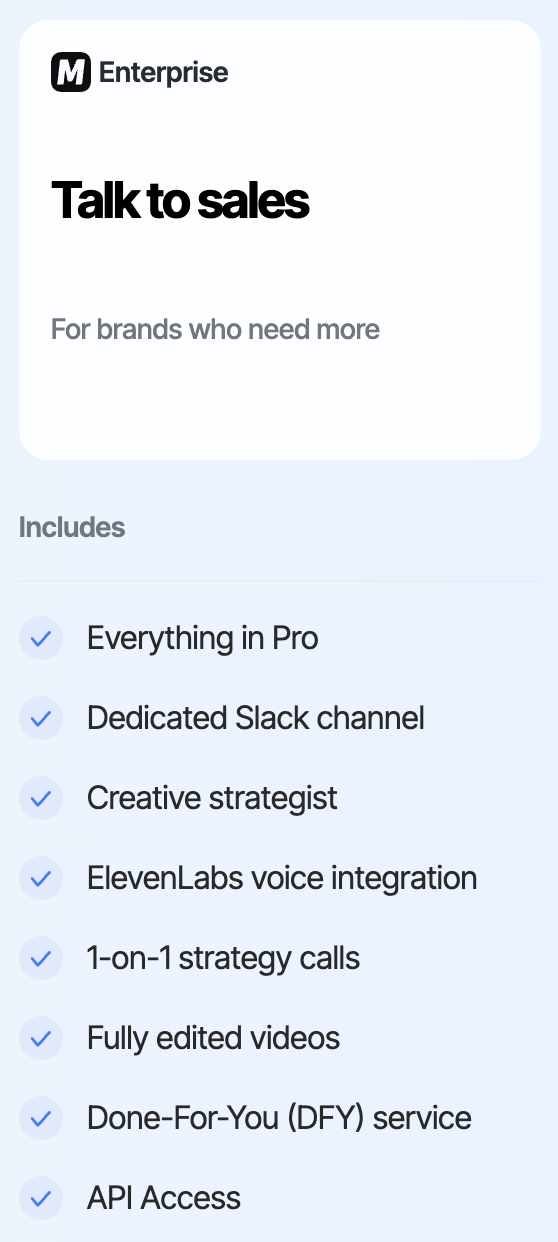
| Enterprise | Custom | Custom | — | DFY service, ElevenLabs voice, Slack channel, API access |
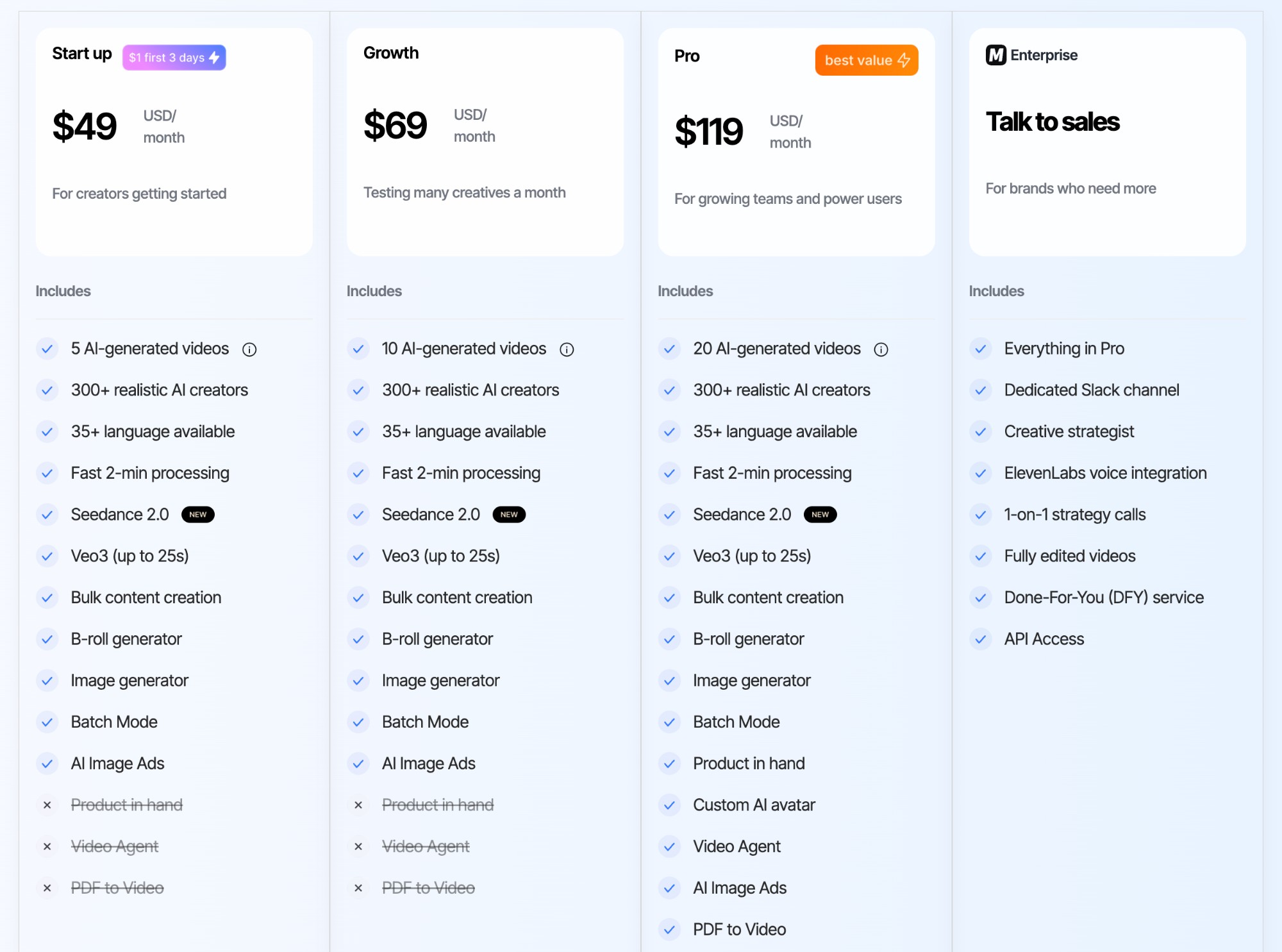
The per-video cost ranges from roughly $6 to $10 depending on your plan. For context, hiring a real UGC creator typically runs $150–$500+ per video, so the AI route is significantly cheaper in absolute terms. But compared to accessing the underlying models directly via API (where a Veo3 generation might cost under $1), you're paying a substantial markup for the platform layer.
The real question is whether the convenience — the avatar library, templates, batch processing, and polished UI — justifies the 5-10x premium over raw API costs. For a DTC brand without a developer on staff, the answer is probably yes. For a technically savvy team that already has API pipelines, it's harder to justify.
Reasonable for non-technical DTC teams who value speed and convenience. Expensive for anyone who can wire up API calls themselves.
Features & Models
MakeUGC's feature set is broader than you'd expect from a platform focused on UGC ads. Here's what you're working with across all plans:
- Seedance 2.0 — Text-to-video and image-to-video with vertical or cinematic aspect ratios. Supports 10s and 15s durations. This is a meaningful differentiator since Seedance 2.0 availability is still limited across most platforms.
- Veo3 — Google's latest video generation model, producing clips up to 25 seconds. Available on every tier, which is uncommon.
- 300+ AI Avatars — Diverse selection of realistic talking-head characters for UGC-style ads.
- B-roll Generator — Create supplementary footage to pair with avatar content.
- Image Generator — Built-in image creation for thumbnails, ad assets, and reference images.
- Batch Mode — Generate multiple variations in one go. Useful for A/B testing ad creative.
- Video Agent (Pro+) — An AI-powered workflow that automates parts of the video creation process.
- Product In Hand (Pro+) — Generate avatars holding or interacting with your actual product. Clever feature for product ads.
The inclusion of Seedance 2.0 and Veo3 across all tiers is the standout here. Many competitors either don't offer these models at all, or lock them behind their highest-priced plans. MakeUGC makes them available from the $49 Startup plan, which means even budget-conscious brands get access to genuinely cutting-edge generation.
The Content Library
One of MakeUGC's strongest selling points is its curated content library — a collection of ready-to-use UGC ad templates organized by industry vertical. Categories include Accessories, Apparel, Beauty & Personal Care, Food & Beverage, Health & Fitness, Tech & Electronics, and more.
Browsing through the library, it's clear where MakeUGC's users actually are: beauty, fashion, and physical consumer goods dominate. These categories have dozens of templates each, with polished avatar setups that look like they could pass for real creator content.
Here's the thing though — I was looking for travel and leisure templates since that's my world. There are none. Zero. If you're in hospitality, tourism, SaaS, consulting, or really anything outside of physical consumer products, the content library isn't going to do much for you.
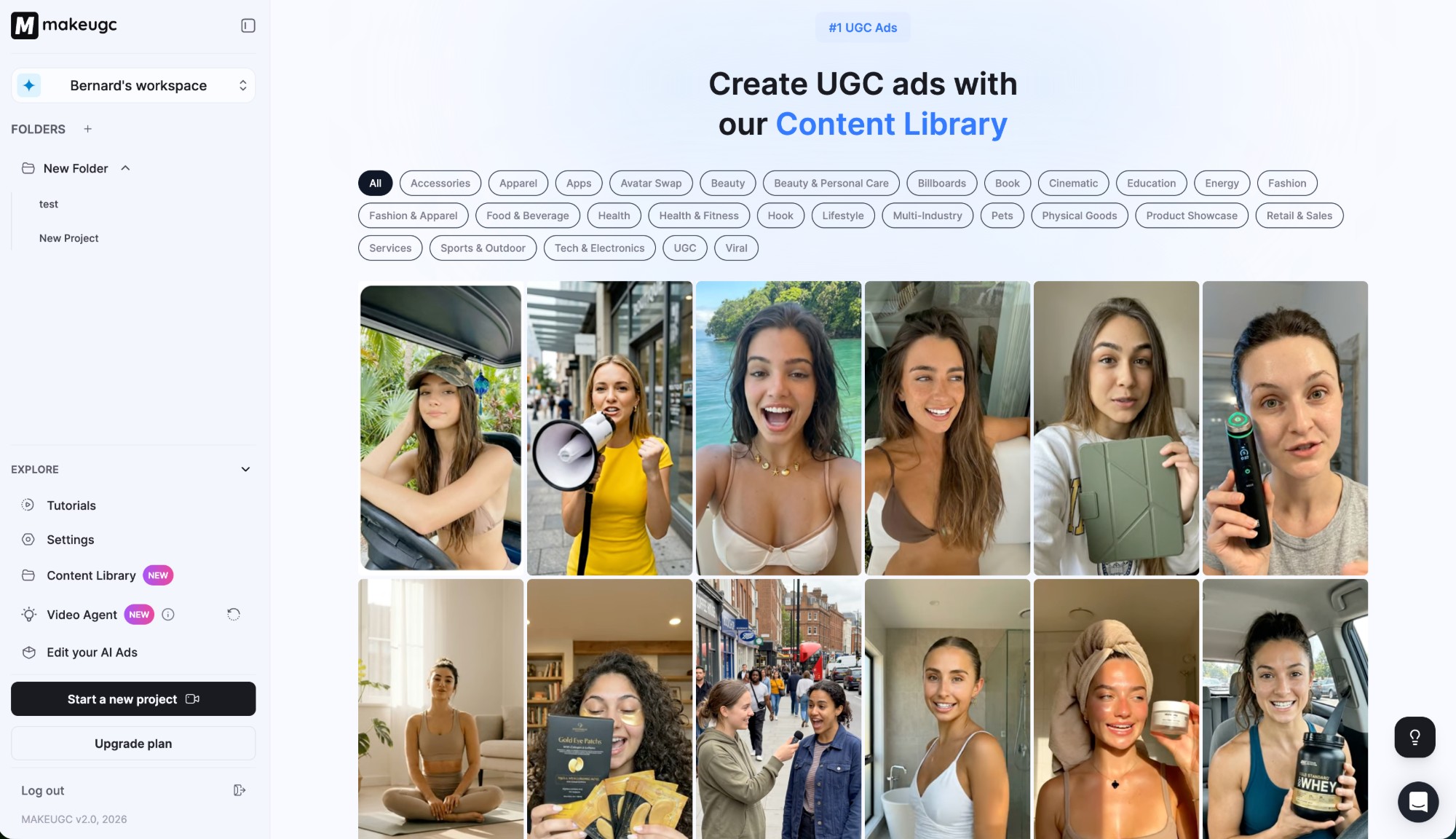
Even the "Services" category — the closest match to something like travel — had just a single template when I checked. One.
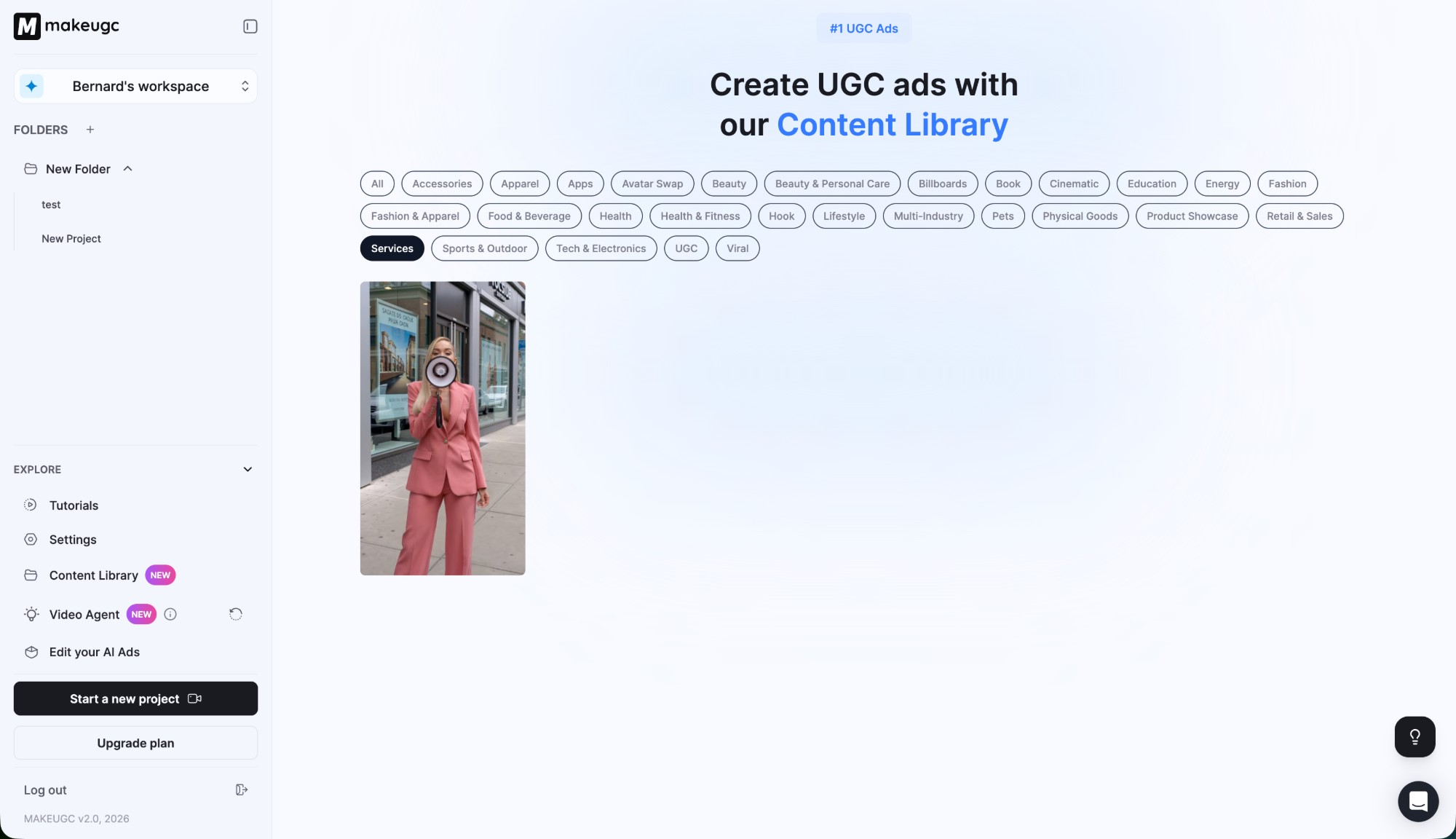
Excellent for ecommerce and CPG brands. Sparse for services, B2B, or non-physical products.
Output Quality
I used my single trial credit to test Seedance 2.0, since it's the newest model on the platform and one that's still broadly unavailable elsewhere. Given that I only had one shot, I spent a solid 20-30 minutes refining my prompt before hitting generate. That nervous energy I mentioned? It turned out to be a good thing — it forced me to be deliberate.
The result was genuinely impressive. The generated video looked natural, had smooth motion, and passed the initial gut check of "does this look like a real person?" with flying colors.
The Prompt Iteration Process
Getting a good result from Seedance 2.0 wasn't a one-shot affair. I went through multiple prompt revisions — testing ideas in a separate chat first — to dial in something that looked genuinely authentic rather than over-produced. Here's how that process actually looked:
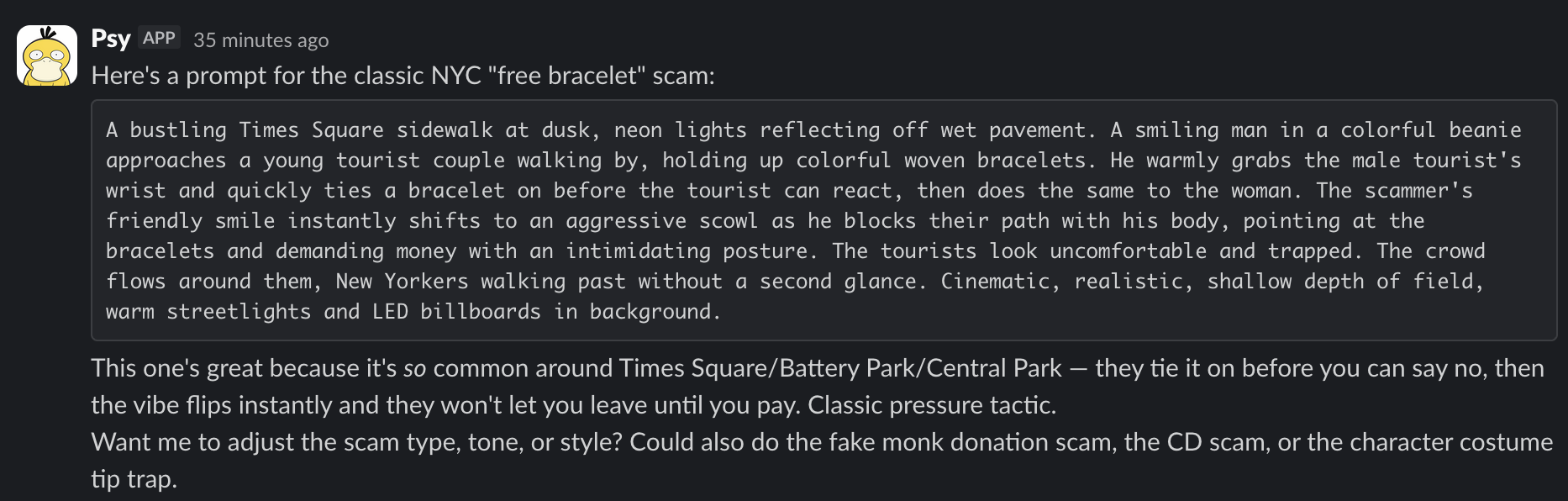
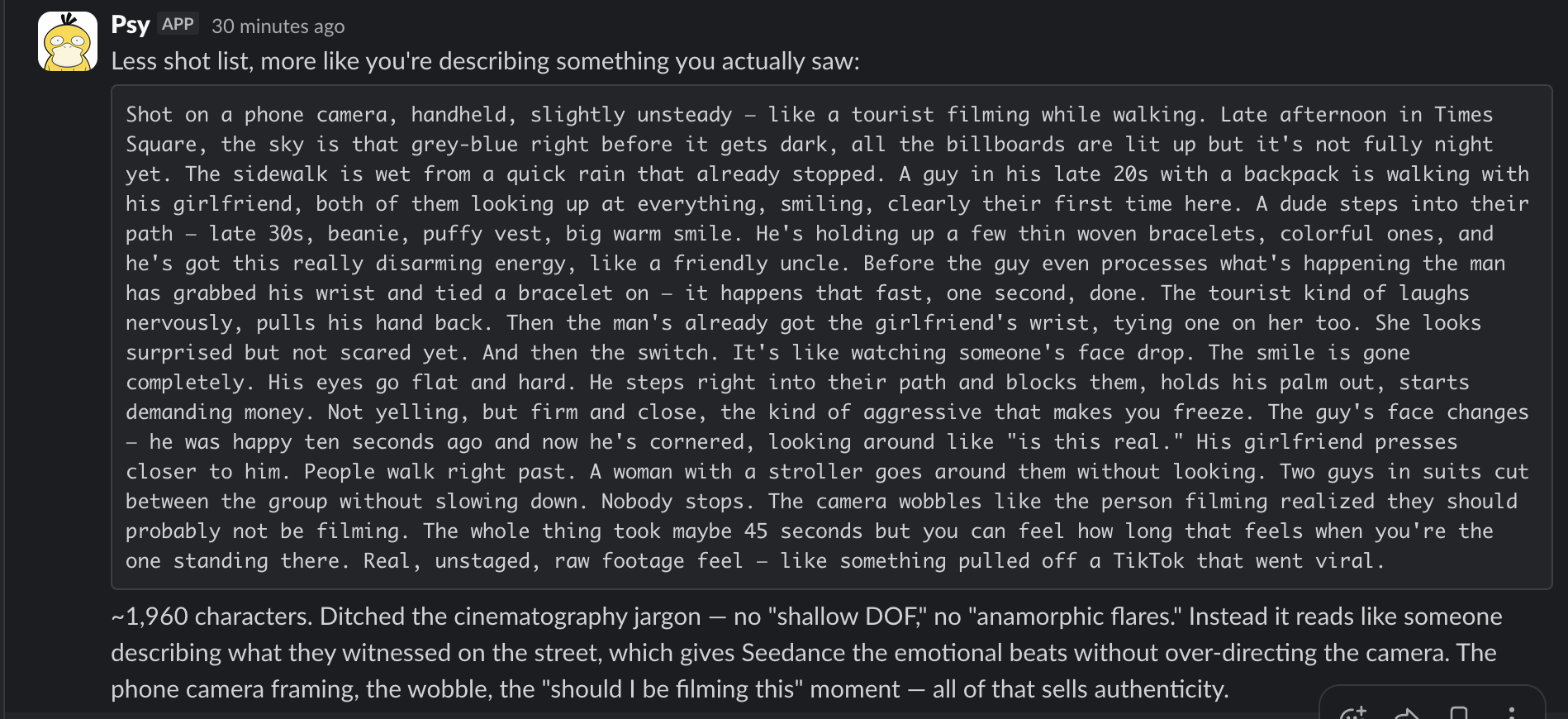
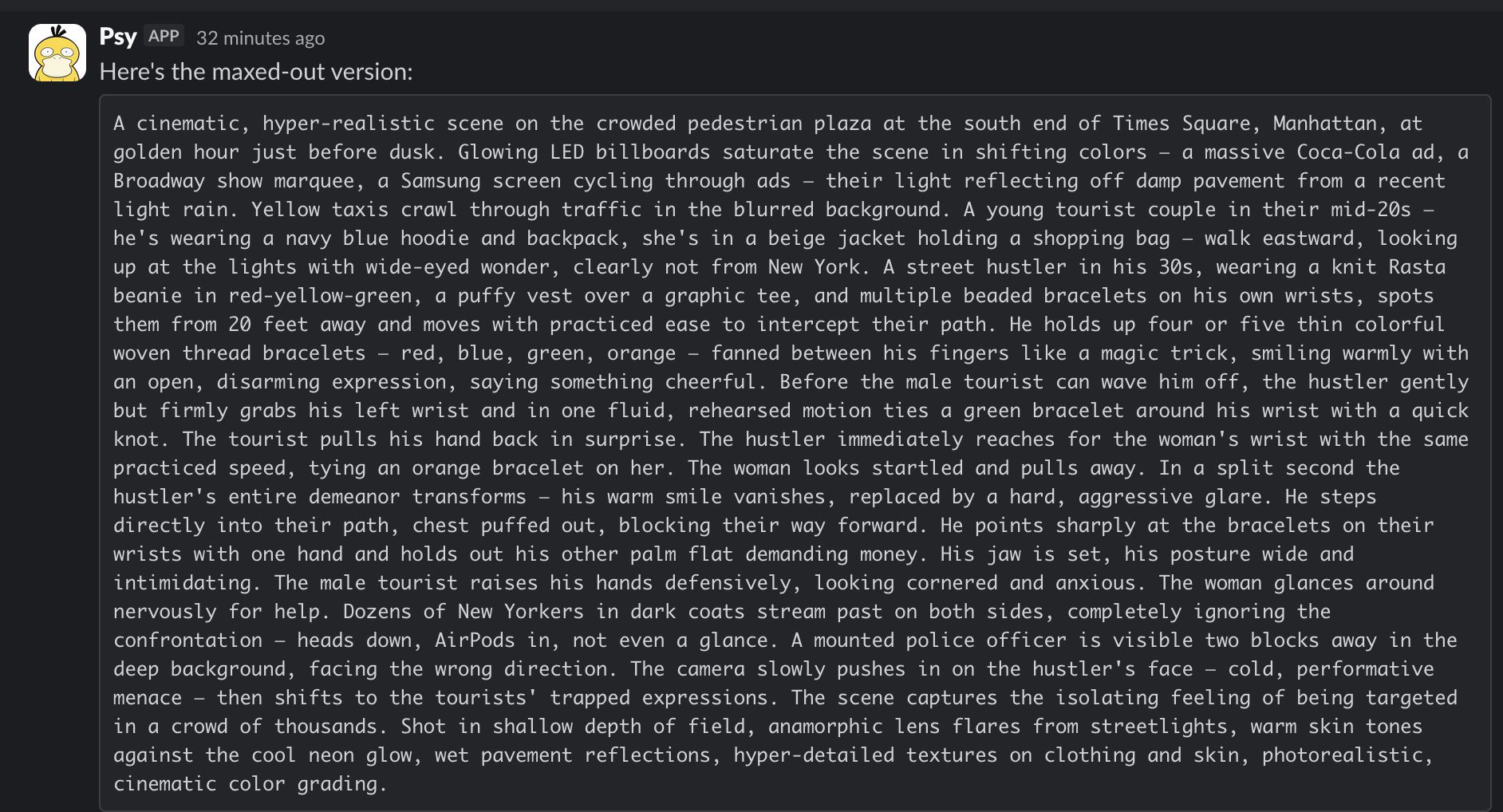
The takeaway: prompt quality matters enormously with these models. A lazy one-liner gets you generic output. Detailed, authentic prompting — describing the scene beat by beat, specifying camera behavior, avoiding AI-sounding jargon — makes the difference between something that looks AI-generated and something that could pass for real footage.
That said — and this is important — the quality here isn't unique to MakeUGC. Seedance 2.0 produces the same caliber of output regardless of which platform serves it. I've tested these models independently and the generation quality is the model's doing, not the platform's. What MakeUGC adds is the wrapper: the avatar selection, the script-to-video pipeline, the template system.
Where MakeUGC does add genuine platform-level value is in avatar consistency. Rather than wrestling with raw prompts and hoping for consistent character appearance across multiple clips, MakeUGC's avatar system gives you repeatable, recognizable characters — which matters a lot for ad campaigns that need visual consistency across multiple creatives.
What I Liked
- $1 trial with full access. Low-risk way to evaluate the platform before committing. This is how every AI tool should handle onboarding — let me poke around before you ask for real money.
- Seedance 2.0 + Veo3 on all plans. This is genuinely differentiating. I've looked at a lot of platforms and many either don't offer these models at all, or lock them behind their highest tier. MakeUGC gives you both from day one.
- Comprehensive tutorials. I actually watched a few of them before using my credit. For a platform this complex, having real video walkthroughs is essential — and they're well done.
- Template-driven workflow. If you sell products in a category they cover (beauty, apparel, CPG), the fastest path from idea to ad creative is picking a template, swapping the script, and hitting generate.
- 35+ languages. If you're selling internationally, being able to localize ad creative without separate tools or translators is a real time-saver.
What Frustrated Me
- One trial credit is not enough. This is my biggest complaint. You can test one avatar, one model, one prompt — and then you're making a $49/month decision based on a single data point. Give people 3-5 credits and they'll make a more confident purchase decision.
- ~$10 per video on the base plan. The underlying API calls cost a fraction of this. You're paying for convenience, and for non-technical teams that's fine — but anyone who can wire up API calls will feel the markup.
- No travel, leisure, or services templates. I went looking for anything in my space and found nothing. The content library is heavily skewed toward physical consumer products. If you're outside that world, you're starting from scratch.
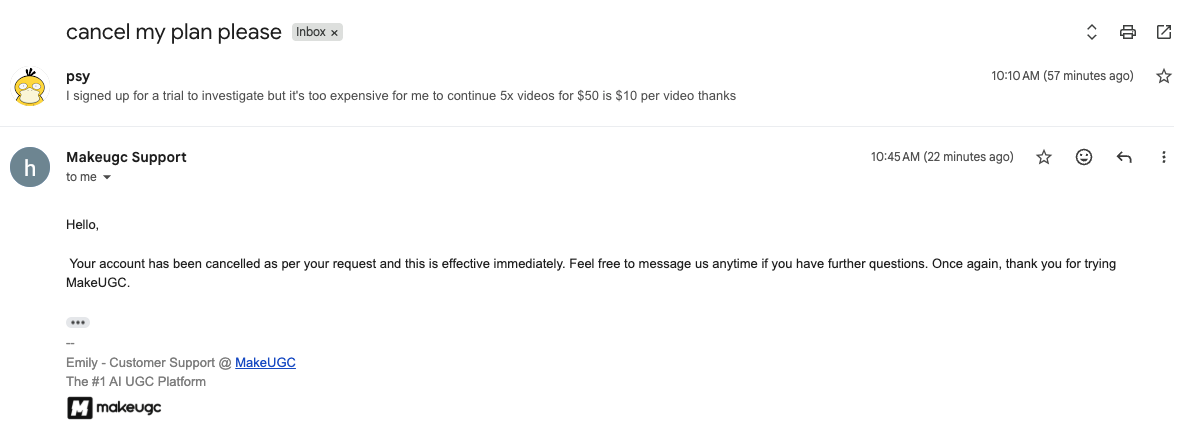
- Email-to-cancel the trial. There's no self-serve cancellation button — you have to email support. To their credit, they responded in about 35 minutes and cancelled immediately. But it's still unnecessary friction in 2026. Just give me a cancel button.
- Key features gated to Pro ($119/mo). Product In Hand, Video Agent, Custom Avatars, and PDF to Video all require the Pro plan. The Startup and Growth tiers are more limited than the pricing page initially suggests.
- API access is Enterprise-only. This is a bigger deal than it sounds. API access is what lets you connect MakeUGC to AI agents, automation tools like Claude Code, or your own production pipelines. Without it, every video requires manual clicks in the dashboard. In 2026, where agentic workflows are becoming standard for content production, locking API access behind a "talk to sales" wall feels like a missed opportunity. This alone could be a dealbreaker for technical teams who want to automate video generation at scale.
How It Compares
MakeUGC sits in a crowded space. Here's how it stacks up against the main alternatives you're likely evaluating. Full disclosure: I haven't done hands-on testing of all of these yet — reviews for Arcads, Creatify, HeyGen, and Synthesia are coming. These comparisons are based on publicly available information and my experience evaluating the AI video space.
| Platform | Focus | Starting Price | Best For |
|---|---|---|---|
| MakeUGC | UGC product ads | $49/mo | DTC ecommerce brands wanting template-driven UGC |
| Arcads | UGC ad generation | $100/mo | Brands and agencies at scale |
| Creatify | AI ad creative | $39/mo | URL-to-video ad generation |
| HeyGen | Avatar video | $24/mo | Corporate, training, and explainer content |
| Synthesia | Enterprise video | $22/mo | Large-scale corporate training and communications |
MakeUGC vs. Arcads: Both target UGC-style ads, but MakeUGC is cheaper ($49 vs. $100/mo starting) and includes Seedance 2.0/Veo3 access. Arcads has a more mature platform with stronger batch creation and analytics.
MakeUGC vs. Creatify: Creatify's URL-to-video workflow is slicker for quick ad generation from product pages. MakeUGC offers more avatar control and a richer content library.
MakeUGC vs. HeyGen/Synthesia: Different market entirely. HeyGen and Synthesia are optimized for corporate talking-head videos, training content, and enterprise communications. If you're making product ads for TikTok and Meta, MakeUGC is the better fit.
Final Verdict
If you sell physical products and want UGC-style ads without hiring creators, MakeUGC is worth your $1 to try. The Seedance 2.0 and Veo3 access on every plan is a real competitive advantage, and the content library provides a fast on-ramp if your niche is covered. But the per-video economics are tough to love at ~$10/clip, the trial gives you barely enough runway to evaluate, and the email-to-cancel process leaves a bad taste.
What would make this an 8 or 9? More trial credits (3-5 minimum), broader template categories beyond ecommerce, lower per-video pricing, and a self-serve cancel button. None of those are hard to fix — which tells me MakeUGC could get significantly better with a few product decisions.
Overall: 7/10 — worth trying for DTC brands, but the per-video economics and single trial credit hold it back. If they shipped 3 trial credits, broader templates, and a self-serve cancel button, this would be an easy 9.
If you want to see for yourself, the $1 trial is genuinely low-risk — just remember you only get 1 credit, so have your prompt ready before you generate. And set a reminder to cancel before day 3 if you're not sure.
Try MakeUGC for $1 → — genuinely low-risk, just have your prompt ready and set a cancel reminder.
FAQ
Is MakeUGC worth it for small DTC brands?
If you sell physical products — yes, it's worth trying. At $49/month for 5 videos (~$10/video), it's significantly cheaper than hiring a real UGC creator ($150–$500+ per video). But here's my honest advice: don't subscribe until you have 3-5 product scripts ready to go so you actually use all your credits. Paying $10 for a single test video because you weren't prepared is a waste.
How does MakeUGC compare to Arcads, Creatify, and HeyGen?
MakeUGC is most directly comparable to Arcads and Creatify — all three focus on AI-generated UGC-style ads for ecommerce. MakeUGC differentiates with Seedance 2.0 and Veo3 access on all plans, plus a large content library. HeyGen and Synthesia are more enterprise-focused. I haven't done hands-on testing of the alternatives yet (those reviews are coming), so take the comparison with a grain of salt — but based on publicly available info, MakeUGC's model access at the $49 tier is the strongest value proposition in the group.
What AI models does MakeUGC use?
MakeUGC integrates Seedance 2.0 and Google's Veo3 for video generation (up to 25 seconds). Seedance 2.0 supports text-to-video and image-to-video with multiple aspect ratios. Both models are available on all plans, including the $49/month Startup tier — which is notable because many competitors restrict newer models to higher tiers or don't offer them at all.
Can I try MakeUGC before committing?
Yes — MakeUGC offers a $1 trial for 3 days with full platform access but only 1 video credit. My advice: spend the first day exploring tutorials and the content library, then use your single credit on day 2 once you've written a solid prompt. And set a calendar reminder for day 3 to cancel if you're not sure — the auto-renewal kicks in at $49/month.
How do you cancel MakeUGC?
There's no self-serve cancel button — you have to email their support team. I emailed them with a simple "cancel my plan please" and they responded in about 35 minutes with an immediate cancellation. So it's painless in practice, just annoying that you can't do it yourself. Make sure to email before your trial's 3 days are up if you don't want to be charged $49.
What is MakeUGC's content library?
The content library is a curated collection of UGC-style video templates organized by industry (Beauty, Fashion, Food & Beverage, Health, Tech, etc.). Each template features a pre-built AI avatar and script structure you can customize. Coverage is excellent for beauty, fashion, and physical consumer goods. But if you're in travel, SaaS, consulting, or services — expect slim pickings. The "Services" category had a single template when I checked.