The Three Unlocks Behind 18M Views of AI Travel Content

We automated everything except the part that had to look human.
- Tabiji is an AI travel-safety channel. One agent turns a tourist-scam concept into a documentary-style reel and ships it to Instagram, TikTok, YouTube, and Facebook. No camera, no crew, no footage.
- 18,117,121 views in 90 days. 6.15M accounts reached, up 141,413.5%. 98.6% of it went to people who don’t follow the account.
- Three unlocks did the work: Reddit as a demand oracle, warming the accounts so they read as human, and one hired human doing the manual following and liking we refused to automate.
- The footage is cheap (~$0.30–$2 a clip) and effectively infinite. Reach is not, taste is not, and a reason to follow is the scarcest thing of all.
Below: the three unlocks, the full machine that makes the reels, and an honest accounting of what 18 million views is actually worth.
The receipt
Tabiji is a travel-safety channel with a one-line premise: name the exact tourist scam in an exact city, then tell you how not to fall for it. The twist is that none of it was filmed. Every clip is generated. A scam concept goes into a queue, an agent turns it into a documentary-style vertical video, burns on a flag and a headline and five story beats, and publishes it across four platforms untouched.
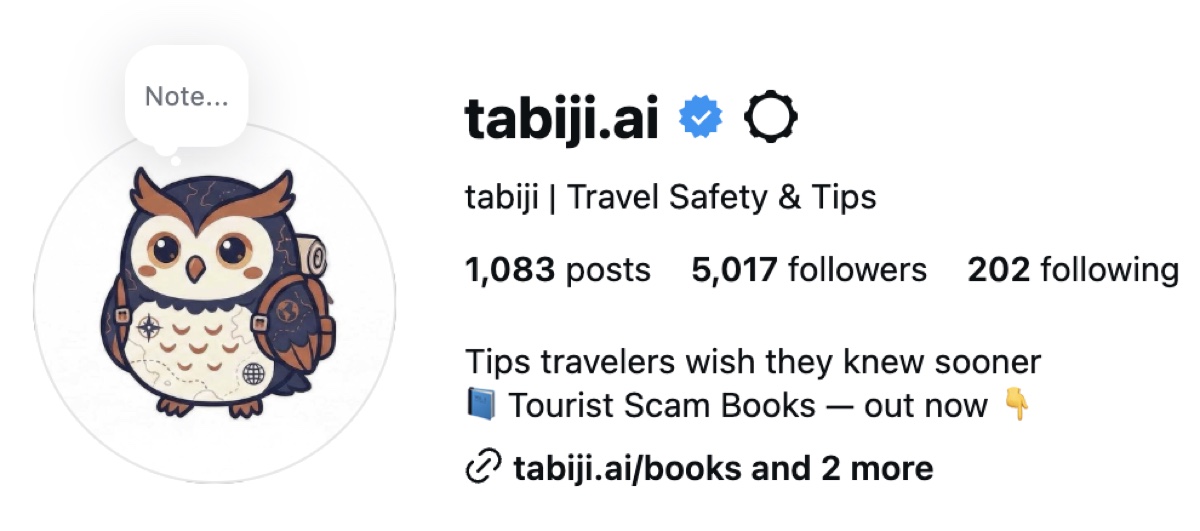
Last 90 days: 18,117,121 views. 6,154,422 accounts reached, up 141,413.5%. 1,083 posts deep, 5,017 followers, and a bio that points at a books funnel. The receipts:
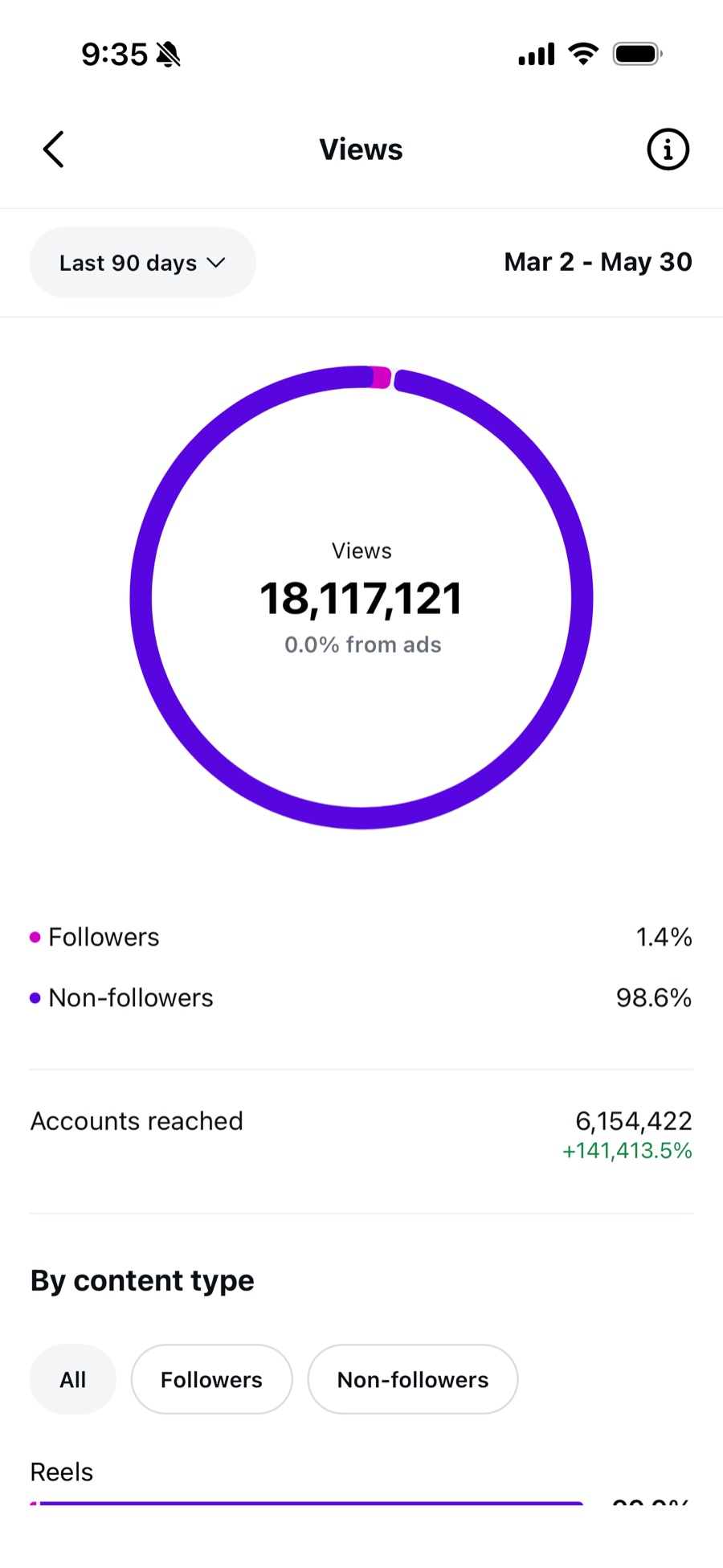
The number everyone fixates on is 18 million. The number that explains it is 98.6% — the share of those views that reached people who don’t follow Tabiji. This was never an audience. It was the algorithm handing a cold warning to a stranger, eighteen million times. Getting it to do that came down to three things.
Unlock 1: Reddit is a demand oracle
The mistake is treating the idea as the creative step. It isn’t. The scam concepts aren’t invented — they’re transcribed. Every reel starts as a top-upvoted thread on r/travel, r/solotravel, or a country subreddit, where someone got burned and came back angry enough to write it all down. An upvoted scam thread is a finished experiment: real money lost, a real victim, and a crowd voting on which stories land. Mining it isn’t brainstorming. It’s demand validation with the results already in.
The specificity is the moat. A thread doesn’t say “watch out for scams in Mexico.” It says the pickup agent at the Cancun rental counter makes a show of the spare tire, and at return a different employee claims it’s missing and charges you hundreds. That’s a real reel we ran — it did 3.9 million views, and I tore down exactly how it was made. The hook and the receipts arrive pre-attached. Generic safety advice is commodity content nobody saves; a named scam at a named counter is not. And the demand underneath is enormous and growing — consumers reported losing $2.1 billion to scams that started on social media in 2025, an eightfold jump since 2020.
One craft lesson took a while: a threat with no defense backfires. Pure shock clips underperform. What travels is threat, then fix — name the scam vividly, then hand over the one move that beats it. That’s why every caption ends with “save this before your next trip.” The save is the product.
Unlock 2: a new account is guilty until proven human
Spin up a fresh account, post a great video, and almost nothing happens. That’s not bad luck — it’s the design. TikTok states plainly that every new video is first shown to a small test audience regardless of follower count, and only expands if engagement clears an internal bar. A cold account with no history starts in the smallest possible bucket. Every platform runs a version of this.
For an automated account the real risk isn’t newness, it’s pattern-matching. The detectors are trained on bot farms, and naive automation walks in wearing the uniform: actions in bursts, mechanical timing, a fresh device on a datacenter IP, a profile that’s instantly 100% complete, a link in the bio on day one. A too-perfect profile is itself a flag. The enforcement is real — in 2025 YouTube terminated more than 12 million channels, most tied to spam and scam networks running accounts in bulk. The platforms are actively hunting the exact thing a careless automation setup looks like.
Worth being honest about what’s documented versus folklore: the small-test-audience cold start is real and published. The day-by-day “like 5–8 videos, follow 2–6, wait a week” recipes are practitioner heuristics, mostly sold by the same people selling you the proxies. The defensible version is negative and simple — don’t post links early, don’t run a fleet off one fingerprint, don’t spike your action velocity, don’t behave like software. Which leads straight to the part we couldn’t automate.
Unlock 3: we hired a human to do the un-automatable part
Here is the uncomfortable shape of it. The content is fully automated. The engagement is not, on purpose.
The thing that finally pushed Instagram over the line wasn’t a better prompt. It was a person. On Rebecca’s recommendation we brought on a contractor whose entire job is the manual, human, boring part: following accounts in the niche, liking real posts, unfollowing, from a real phone, at a human pace. No automation tool — because automated engagement is precisely the signature that gets an account throttled or killed. The one input a platform can’t easily catch is a real human thumb.
That’s the whole trick, and it’s almost funny. We’ll happily let a model generate the video, write the caption, pick the thumbnail, and publish to four platforms with nobody watching — but the following and liking has to be a person, because that’s the part the platform is checking for a person. We automated the expensive creative work and paid a human to do the cheap repetitive work. The exact inversion of how this was supposed to go.
The machine
The pipeline is narrow and opinionated. A scam concept — place, setup, scammer move, tourist reaction — becomes a documentary-style prompt. That prompt goes to WaveSpeed running ByteDance’s Seedance 2.0 text-to-video: ten seconds, vertical, 480p, no on-screen text. We never let the model render text — it’s bad at it and it kills the realism.
When the raw clip comes back, FFmpeg measures the actual frame and burns on the overlay: the country flag, a wrapped two-line headline, and five lower-third story beats that appear one at a time. Then a single publish step pushes it to Instagram Reels, YouTube Shorts, TikTok, and Facebook, each with the right thumbnail and its own caption. The whole thing runs off a priority queue — the agent pulls the next concept and ships. (Seedance’s moderation rejects some scam prompts; the system softens the language without losing the mechanics, then retries.)
It is not free. A single Seedance clip on WaveSpeed runs about $0.30 to $2 depending on duration, resolution, and how many clips you stitch together to land one usable ten seconds — plus the tokens to write the prompt, the captions, and the metadata. There’s no studio, no location, no actor, no editor, but “cheap” is relative: at a dollar a reel, 1,083 posts is a four-figure generation bill, and that’s before a single one is guaranteed to be any good.
Which is the part nobody warns you about. The bar for what makes a good reel is a moving target. The model that nailed handheld realism last month over-stylizes this month; the hook length that held attention in March gets skipped in May; an overlay that read clean at 480p looks amateur once everyone copies it. The pipeline isn’t a thing you build once and leave running — it’s a thing you re-tune constantly against a standard the platforms and the audience keep raising. Cheap generation lowered the cost of a clip. It did nothing to lower the cost of taste.
What 18 million views is actually worth
Less than you think, and more than you think, depending entirely on what you do next.
Directly, almost nothing. Instagram’s old Reels Play bonus fund is gone. The surviving ad revenue share pays somewhere around $0.01–$0.10 per thousand views — one creator reported $24 for 241,000 views. At that rate 18 million views is worth roughly $180 to $1,800, and realistically zero if the account isn’t even enrolled. As media you’d have to buy, those same 18M impressions would run a brand $90k–$450k at normal ad rates — but that’s the value of being the advertiser, not of receiving views you can’t bill.
The 98.6%-strangers figure isn’t a failure, it’s the design of the 2026 feed: content-first, not creator-first. A viewer enjoys the clip, the algorithm serves them another like it, and they never get a reason to follow. Eighteen million views converted to about 5,000 followers — roughly three hundredths of one percent. Reach is abundant now. A reason to come back is scarce.
But look at who stayed. The audience the algorithm built skews old — and that’s the most interesting number in the whole account.
That is not a random crowd. Older travelers lose the most money to these scams, they’re the ones who forward a warning to a spouse or a sibling, and they’re the ones who will actually buy a book that promises to keep them safe. The algorithm didn’t just hand the reels to strangers — it handed them to the exact demographic the product is for. The audience targeting I never set up turned out to be the best part of the funnel.
An organic view is worth exactly what you capture off-platform before the algorithm moves on.
Which is why the only line on the profile that matters is the one in the bio: a link to tourist scam books at tabiji.ai/books. The views are rented. The email address and the book sale are owned. Reach is the demo; the funnel is the product.
The takeaway
Tabiji is one probe in a bigger thesis — a fully autonomous content business a single operator can run on a cron. The generation half is solved. Reddit hands you validated demand, Seedance turns it into footage, FFmpeg dresses it, one script ships it everywhere. The distribution half is where the humans still live: new accounts are guilty until proven human, and the cheapest way to prove it is an actual human.
So the lesson is the inversion. Automate the part that looks like work, and keep a person on the part that has to look like a person. We got eighteen million views by letting the machine make everything and refusing to let it do the following.
We automated everything except the part that had to look human.
Newsletter
Get the next post by email.
One email when I publish something new. No spam, no fixed schedule, unsubscribe anytime.