Back to the Tables
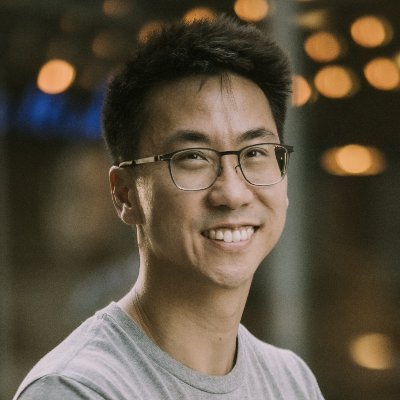
Two months ago I stepped away from Clearscope after a decade-long run. And for the first time in about ten years, I'm sitting in front of a genuinely blank page, asking the question you don't get to ask while you're running a company… or usually ever: what do I actually want to explore and dive into next?
The core direction I'm exploring now is markets (public equities + web3): with a poker background to help with mindset, Claude Fable 5 and GPT 5.6 Sol as the analysts, and an initial $20k bankroll. This post is the backstory of why it's interesting to me.
- The beginning of this arc traces back to a burrito. I bought my friend Eric Chipotle in high school; he transferred me $10 on PokerStars. The Chris Ferguson challenge did the rest — that $10 compounded into six figures by the end of college.
- The bankroll bought into a barbecue restaurant (lesson: the rent has no variance), funded the learn-to-code era, and got shelved at the one real fork of my career, when my dad tipped the decision toward Silicon Valley over trading. He was right.
- Poker transfers temperament, not information: bankroll management is position sizing, tilt control is tilt control, and most of the skill is declining to play.
- This time the desk has AI analysts on it, and I'm 100% in exploration mode. No fund, no signals, no course.
This is the first post of the chapter, not a retrospective. Nothing here is investment advice — it's barely career advice.
The legend at boarding school
I did my last two years of high school at the Texas Academy of Mathematics and Science — TAMS — a program where Texas teenagers skip the end of high school and take a full college course load instead. You'd expect the formative influence of a place like that to be the coursework. It wasn't.
The story that made the rounds was about a student named Haseeb, who played online poker seriously — seriously enough that, the way the legend went, he'd banked enough to buy a house before he ever started at UT Austin. What mattered was what the story did to seventeen-year-old me: it reframed freedom as something with a buy-in. Not a salary you climb toward for thirty years — a game you could sit down at right now, with stakes you could afford.
I wanted that level of freedom more than I wanted anything in the course catalog.
A burrito for a bankroll
Which brings me to the burrito.
Getting money onto PokerStars as a student was its own minigame, so the workaround was the friend economy. Eric — one of my best friends then and now — had money on the site. So we executed the least glamorous foreign-exchange trade in history: I bought him Chipotle, and he transferred me $10 on PokerStars.
That $10 came with a curriculum attached. Chris Ferguson had famously run $0 into $10,000 by following strict bankroll rules, the heart of which is: never put more than about 5% of your roll into any single game. I gave myself the $10 head start and adopted the discipline wholesale. At a $10 bankroll, 5% means the smallest stakes the site offers. It is hard to overstate how unglamorous the bottom of that ladder is. You are grinding pocket change against opponents playing for fun, and you are somehow still nervous.
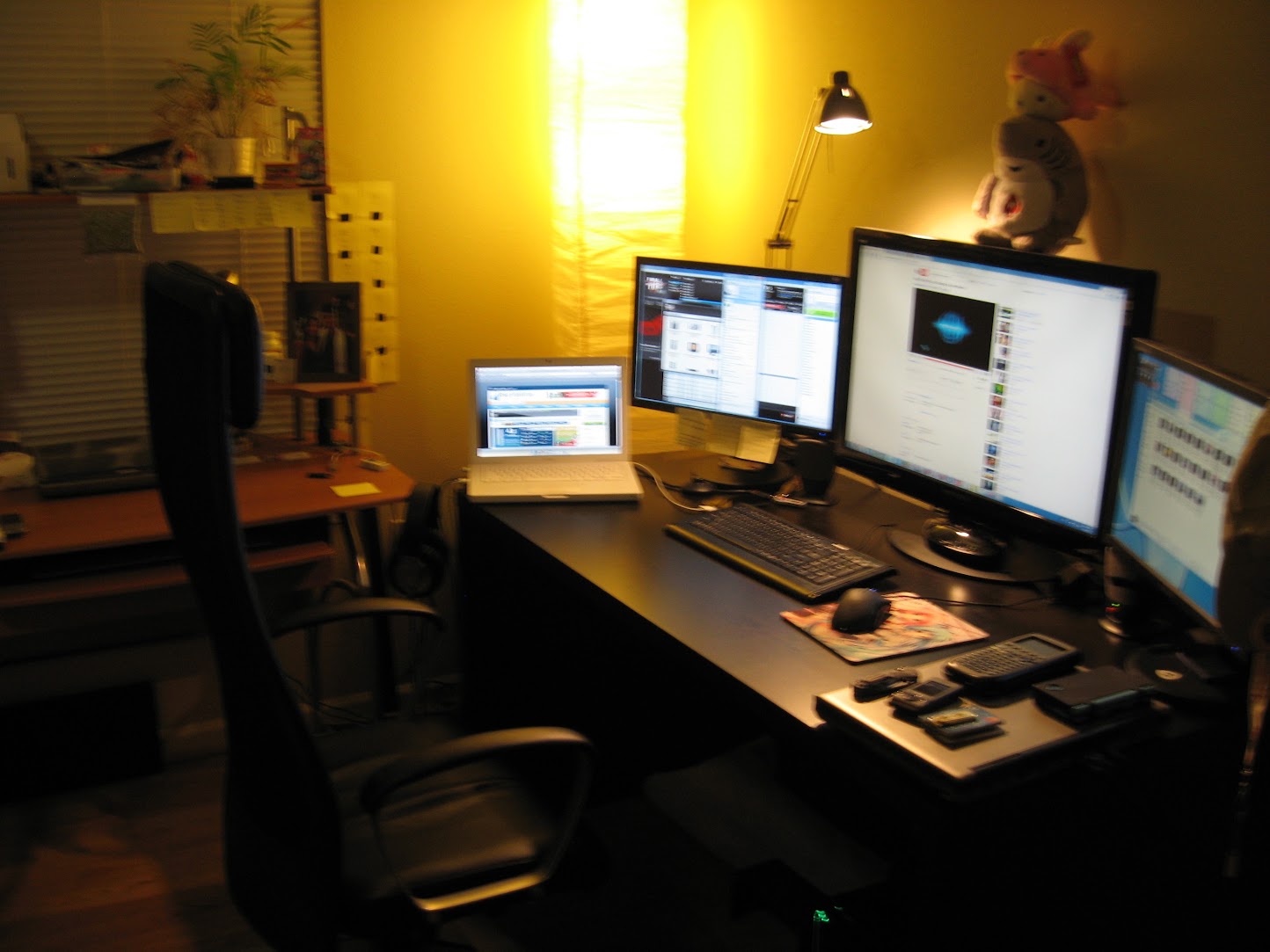
But the ladder held. Stake by stake, semester by semester, the burrito money compounded into six figures by the end of college. I'd love to show you the graph.
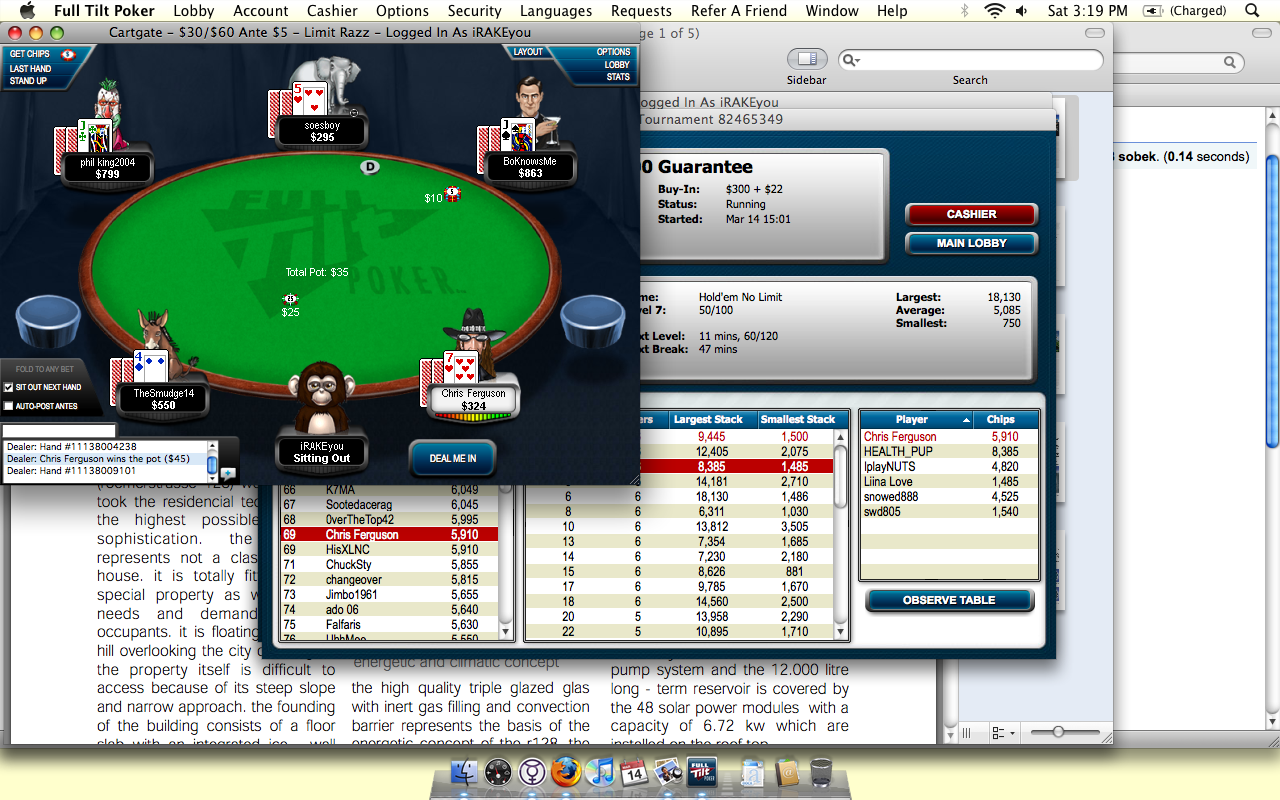
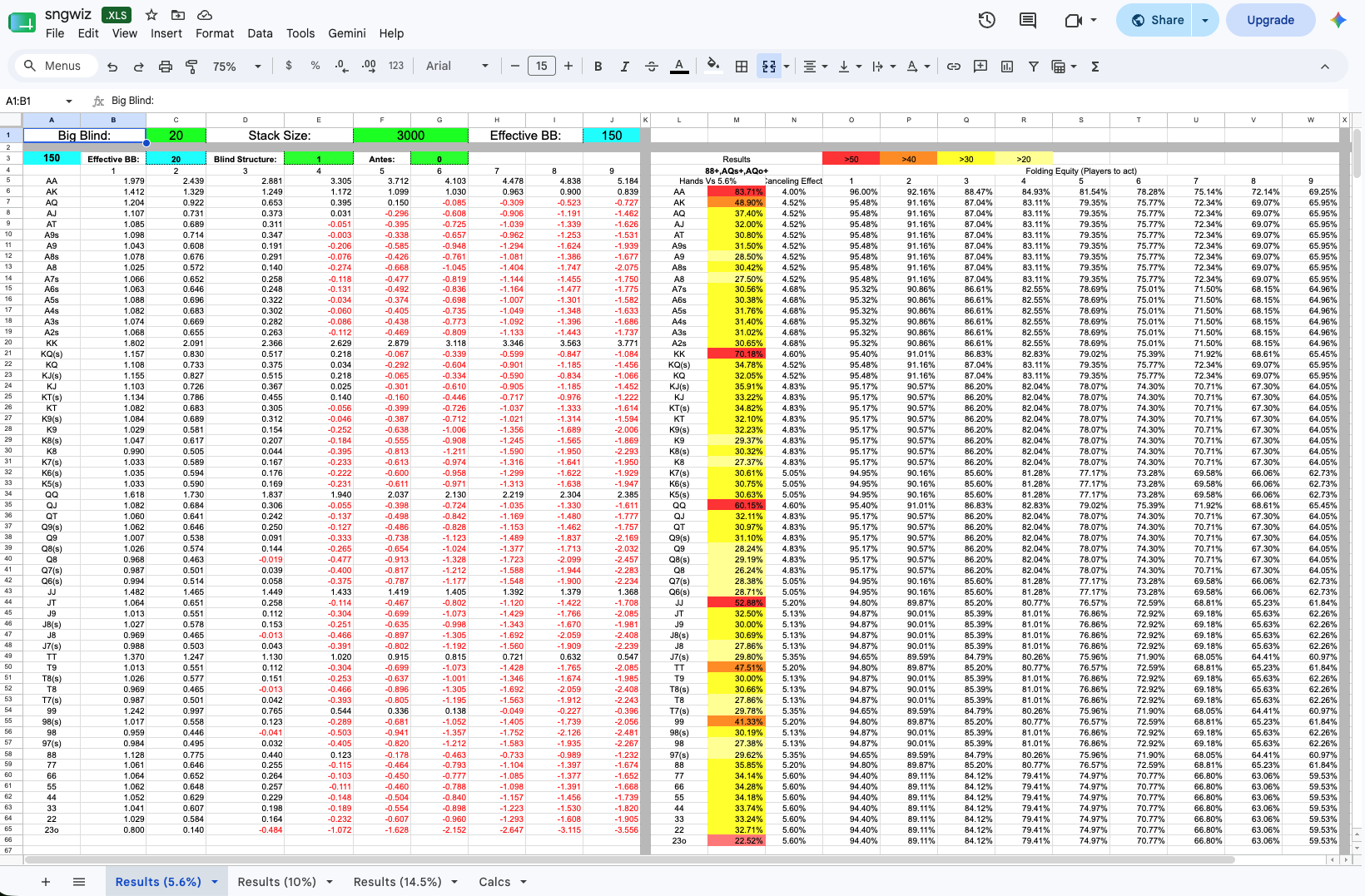
Poker didn't just pay for things, though it did that too. It installed the operating system I still run: think in expected value, size every bet to survive being wrong, and treat each session as a sample from a distribution — not a verdict on your genius.
The barbecue detour
What does a college kid do with a poker bankroll? Obviously: he and some friends buy into a Dickey's Barbecue Pit.
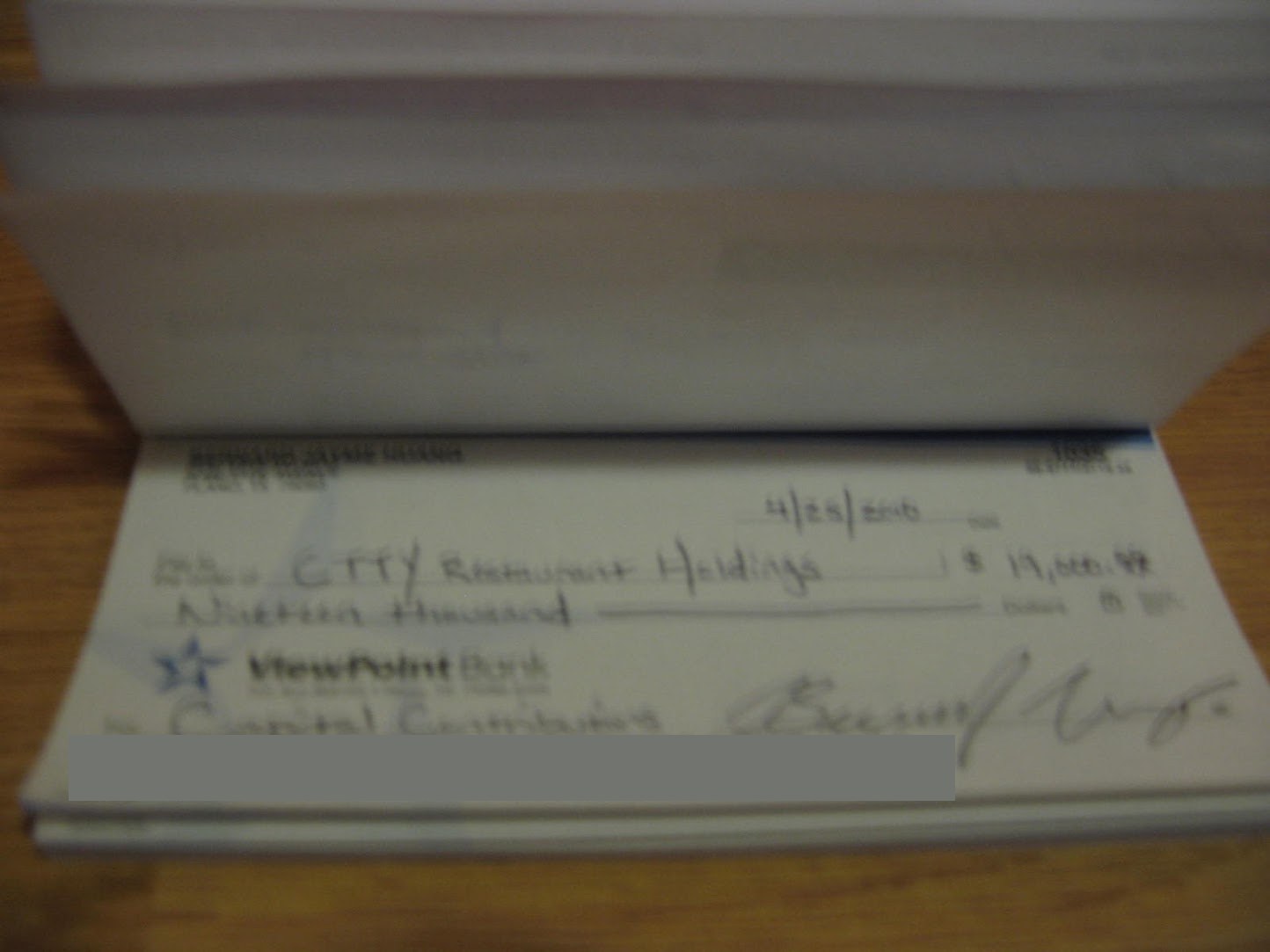
On paper it was diversification — real cash flow from a real business with real brisket. In practice, early-2010s brick and mortar was a masterclass in a single lesson: the rent has no variance. Poker at least lets you pick your spots. You can fold, change tables, wait for a better game. A restaurant takes its cut every month whether the customers show up or not. We weren't a disaster; we were just playing a game where the house edge belonged to the landlord.
I came away convinced that software was the better table, and taught myself to code. Even then, if I'm honest, there was a quieter pull toward trading — markets being the only game bigger than poker. I filed it under someday and went off to build things instead.
The fork I didn't take
My first couple of startups failed the normal way: quietly. And then came the first real fork of my career. I was deciding between moving to Silicon Valley to join a YC company, or getting my start in trading for real. The pull had never gone away.
My dad convinced me that real-world experience inside a working company would compound better than an early start in the markets. He won, and he was right. I joined 42Floors, learned growth and SEO inside a startup that was actually working, and eventually founded Clearscope — which became ten years of my life and a business I'm genuinely proud of. Two months ago I stepped away, fully.
Which un-forks the fork. The road I didn't take has been sitting there patiently the whole time.
What transfers (and what doesn't)
It would be easy to write "poker gives me an edge in the markets" and wrong to leave it there. So, precisely: what I think carries over, and what doesn't.
- Bankroll management is position sizing. Same math, same job: survive being wrong long enough for being right to matter. I've been running the never-bet-the-roll rule since it was denominated in burritos.
- EV thinking over outcome thinking. A good decision that loses money is still a good decision. Poker beats this into you one bad beat at a time; markets punish anyone who never learned it.
- Tilt control. The market is a machine for manufacturing tilt. Poker made me pay directly, in cash, for every tilted decision until I mostly stopped making them. Mostly.
- Folding. Most of poker is declining to play. From everything I've seen so far, most of trading is the same skill in a different jacket.
What doesn't transfer: information. Poker taught me how to lose correctly; it has exactly zero opinion on what the Fed does next. Temperament is necessary and nowhere near sufficient — a lesson I already have receipts for, because when I let three AIs backtest ~310 strategies, buy-and-hold beat nearly all of them after honest costs. The benchmark is undefeated until further notice. I'm showing up anyway. That's kind of the whole personality.
The desk this time
The other reason it's now: I'm not showing up alone.
Claude Fable 5 and GPT 5.6 Sol are on the desk as analysts — one researches and builds, the other audits and tries to kill whatever the first one built. The house rules from the vibe-trading saga carry over unchanged: no LLM ever touches the order path, auditors reproduce numbers instead of reading prose, and everything gets benchmarked against doing nothing. A poker temperament plus two tireless analysts is a meaningfully different animal than a college kid grinding the micros between classes. Whether it's different enough is, genuinely, the experiment.
And it is an experiment. I'm 100% in exploration mode: no fund, no signals to sell you, no course. (Especially no course.) Just the thing this whole site already is — do it for real, write down what happens, keep the receipts.
Seventeen-year-old me heard a legend about a kid who bought his freedom at a poker table. It took a burrito, six figures, a barbecue restaurant, a couple of failed startups, and a decade of Clearscope to get back to the game with my own chips.
Just getting started. Follow along.
Newsletter
Get the next post by email.
One email when I publish something new. No spam, no fixed schedule, unsubscribe anytime.