The May Recap: Miami, a Google Wipeout, and $600 in the Red

A conference handed me a build technique that changed everything, Google erased my biggest site’s search traffic overnight, and the only reason that didn’t matter is diversification.
- Went to Consensus in Miami. The takeaway wasn’t a keynote — it was one idea a friend shared over dinner that now lets my build loop one-shot Chrome extensions and two-to-three-shot mobile apps.
- Around May 10, Google wiped almost all of Tabiji’s search traffic and it hasn’t recovered.
- Still about $600/month in the red. The biggest revenue line is Tabiji books on Amazon (~$125/mo) — which is exactly why the Google wipeout didn’t sink anything.
- Four lessons, the kind that compound.
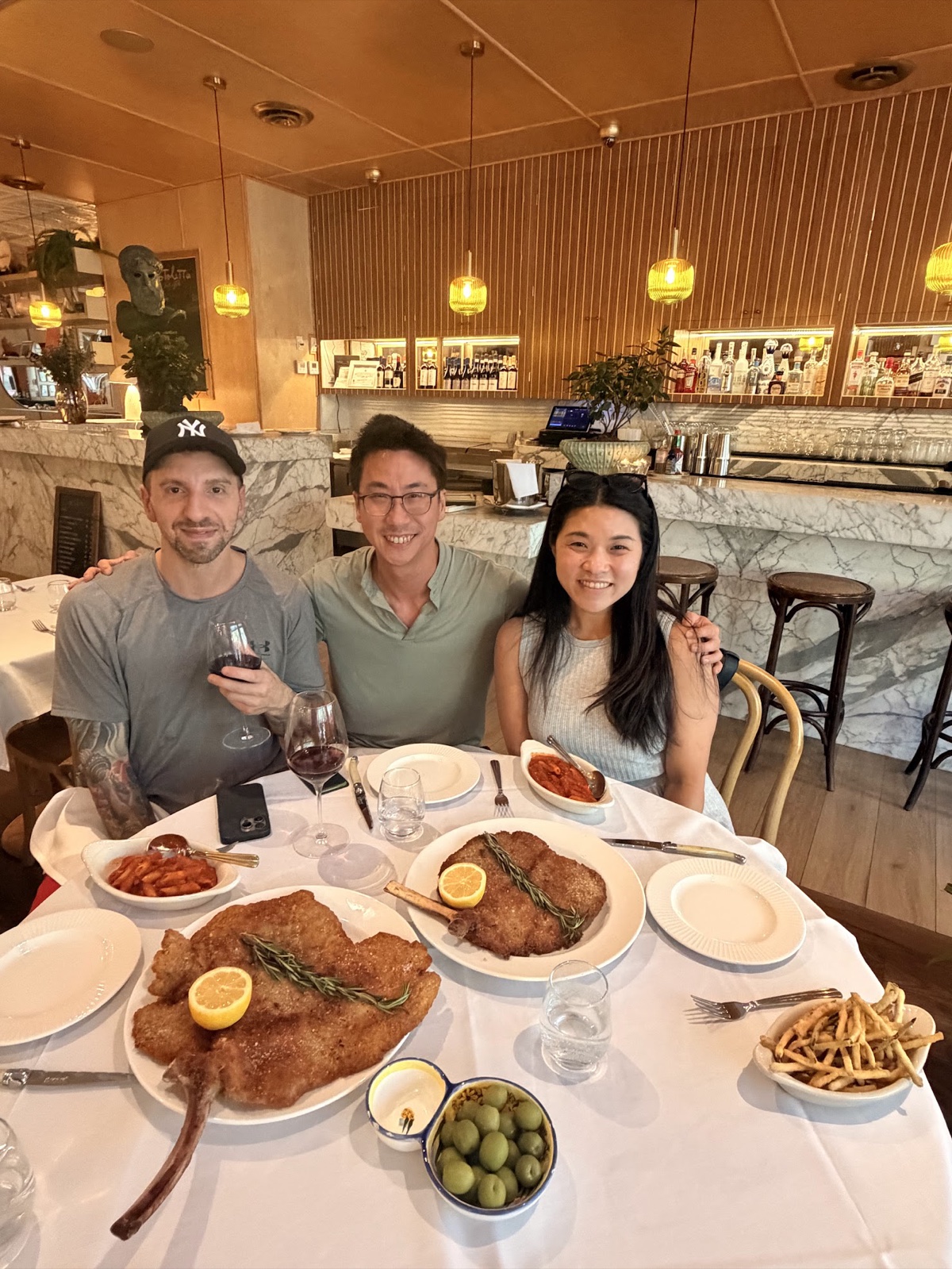
Consensus, Miami
The best part of a conference is never the stage. I flew to Consensus and spent it trading notes with people who build the way I do.

The one that mattered: Jen introduced me to planning three times before building once. Run a frontier model through three independent planning passes, reconcile where they disagree, then let it implement. I’d written about a version of this before, but watching a practitioner who lives it explain the nuance moved it from “a thing I do sometimes” to the default. On my Hermes + GPT-5.5 setup it’s the difference between a coin flip and a near-sure thing: Chrome extensions (Veracity) now come out in one shot, mobile apps (Palmaura) in two or three. Aaron sharpened a few other corners of the workflow, and Gaetano was the standing reminder that one freelancer with the right taste can out-maneuver a whole team.
Google wiped Tabiji’s search traffic
Then the gut-punch. Around May 10, Tabiji’s search traffic fell off a cliff — from a healthy ramp to essentially zero overnight — and weeks of trying haven’t brought it back.
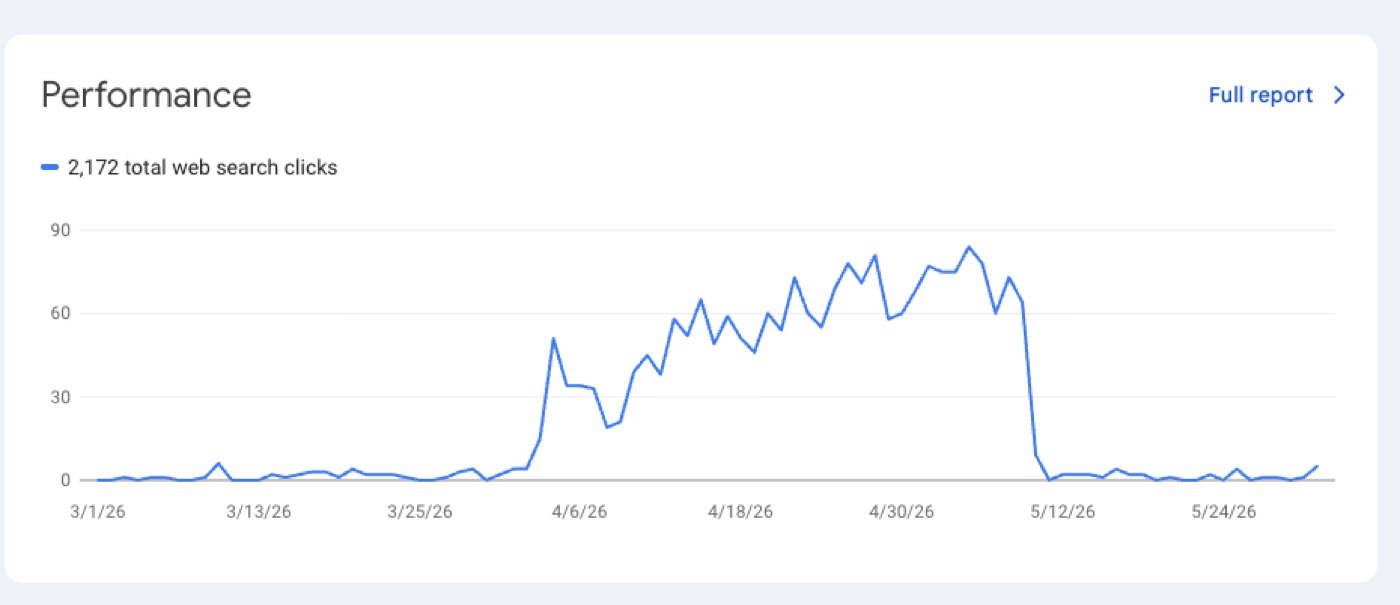
I can’t point to a manual penalty. My best guess is that Google has gotten extremely twitchy about new sites in the vibecoded-slop era: a young domain publishing AI-assisted content at volume is exactly the profile they’re now quick to bury, and the algorithm would rather wrongly suppress a thousand new sites than let one slop farm through. Painful. But — and this is the whole story of the month — not fatal.
The numbers
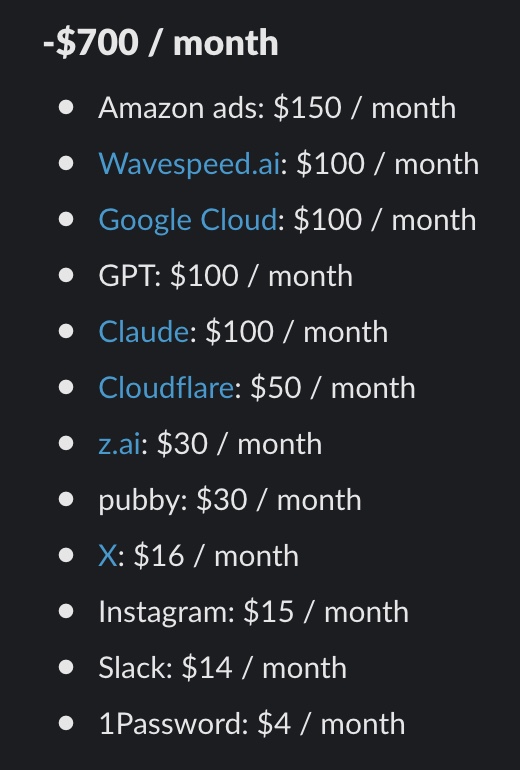
Full transparency, as always. The stack runs about $700/month: ads, video generation (Wavespeed), cloud, the model subscriptions (Claude, GPT, z.ai), and a long tail of small tools.
Against that, the biggest revenue line is Tabiji books on Amazon Kindle: 45 units across 30 titles in May, roughly $125/month.
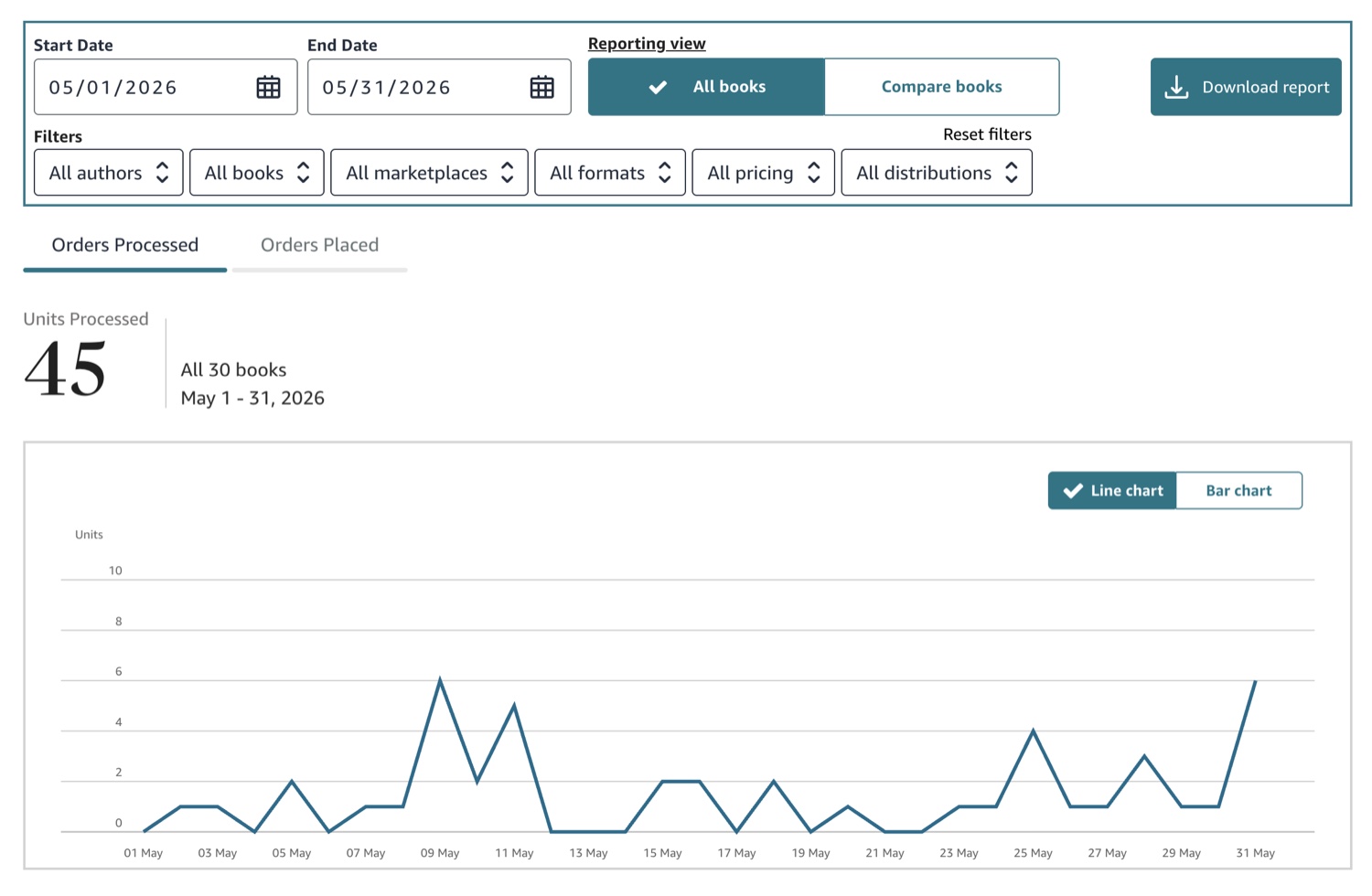
Net: still about $600/month in the red. Not a business yet. A lab with a tab. But the shape of where the money comes from is the lesson.
What May taught me
1. Diversify or die. Google erased Tabiji’s search traffic and it barely touched revenue — because the money is made on Amazon, a completely different surface that Google can’t turn off. The 18 million social views live on yet another. Single points of failure are how you die quietly; spread the bets and a catastrophe on one channel becomes a Tuesday.
2. Trade notes with practitioners. The plan-three-times unlock didn’t come from a blog post or a model release. It came from Jen, over dinner. In the AI era your edge is specific, hard-won technique — the prompts, the skills, the way you decompose a problem — and the fastest way to compound it is to swap notes with people who are also in the weeds. One dinner moved my whole build loop.
3. Protect the flow. When I’m locked in I’m juggling four to seven contexts across the agents at once. Breaking that to take a meeting costs roughly 5× what it did before AI — rebuilding all that mental state is the expensive part, not the meeting. It’s also seductively easy to optimize a local maximum (more social views, more SEO, a slightly nicer product) instead of the thing that actually moves the business.
4. More surfaces, more combinations. Every area I learn — AI influencers, books, apps, games, MCP and APIs — isn’t a separate silo. It’s another card in the deck. The real wins keep coming from combining them: a viral reel that funnels to a book, a game that documents a dead project, an API that powers an app. The playbook compounds.
Next
The search wipeout stings, and I’ll keep poking at recovery. But May proved the thesis it was quietly built on: diversify the surfaces, compound the technique, and guard the focus that makes any of it possible. June: keep stacking cards.
Newsletter
Get the next post by email.
One email when I publish something new. No spam, no fixed schedule, unsubscribe anytime.